Buy a Relocatable Home
Craning a House Over the Neighbours: Inside One of Our Toughest Moves
Inside a Complex-Lift Case Study
Most house moves are a careful crawl down a planned route - permits sorted, power lines isolated, traffic signals lowered, the house rolling through on its trailer at walking pace. This one was different. The site simply didn't allow a house to be driven in, so the only way to land it was to lift it clean over the top of the neighbouring houses on either side. It was a first for our crew, and it's stuck with us as one of the jobs that best shows what we can actually do when the straightforward route isn't an option.
The Job That Called for Something Different
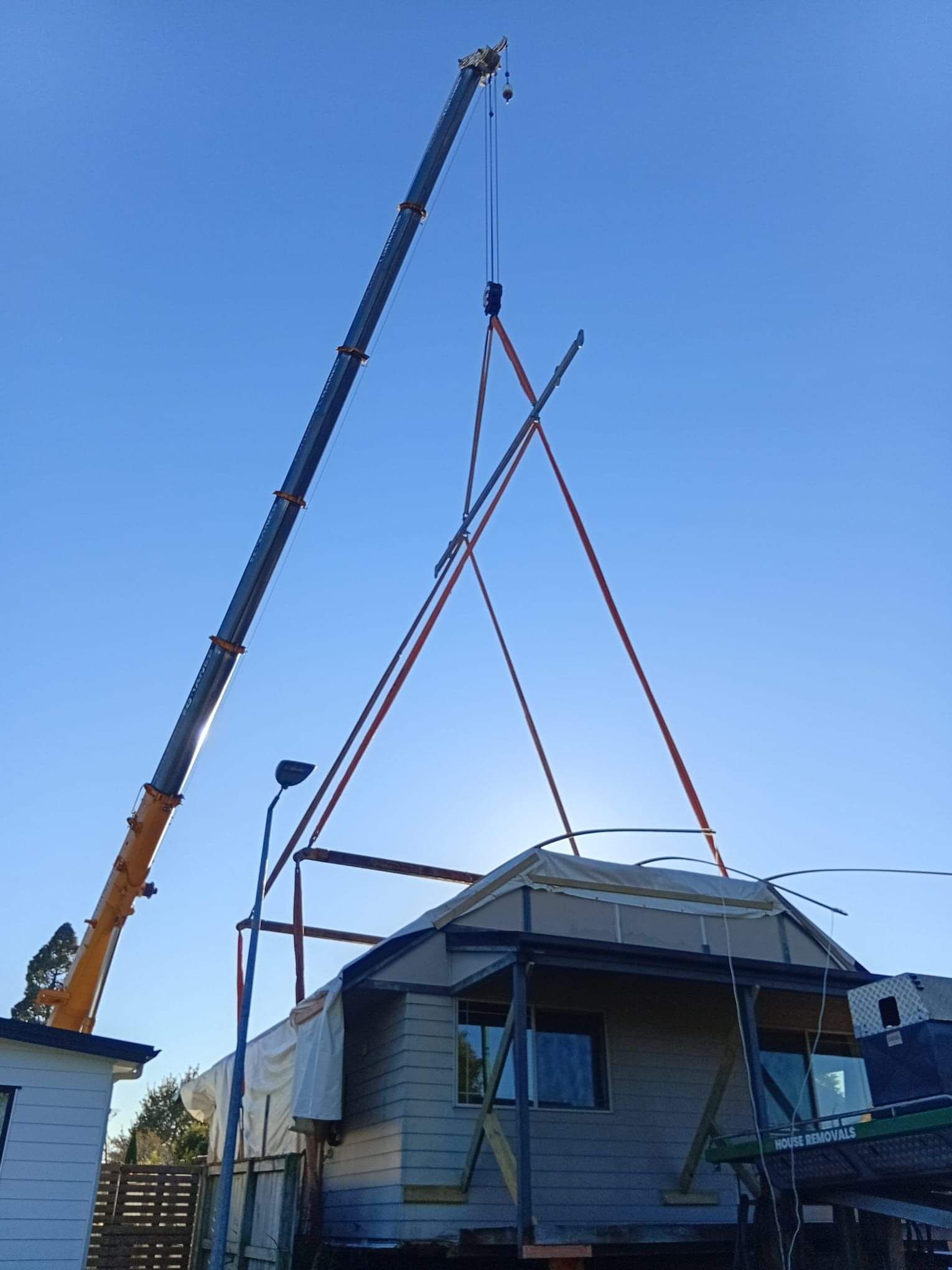
Every relocation starts the same way - walking the site, checking the access, working out how a house this size is actually going to get from the road to its new foundations. On this job, that walk told us straight away that a conventional approach wasn't going to work. The gap between the neighbouring properties was too tight, the angles too awkward, for a house to be trucked in the normal way. So we craned it - lifting the home up and over the roofs of the houses next door to set it down on its new site. It took a crane rated for the job, a crew who trusted the plan, and a level of precision that doesn't leave much room for error when you're swinging an entire house above someone's roofline. It came off cleanly, and it's the kind of job that tells a client something about us: when the obvious route is closed, we find another one rather than turning the job away.
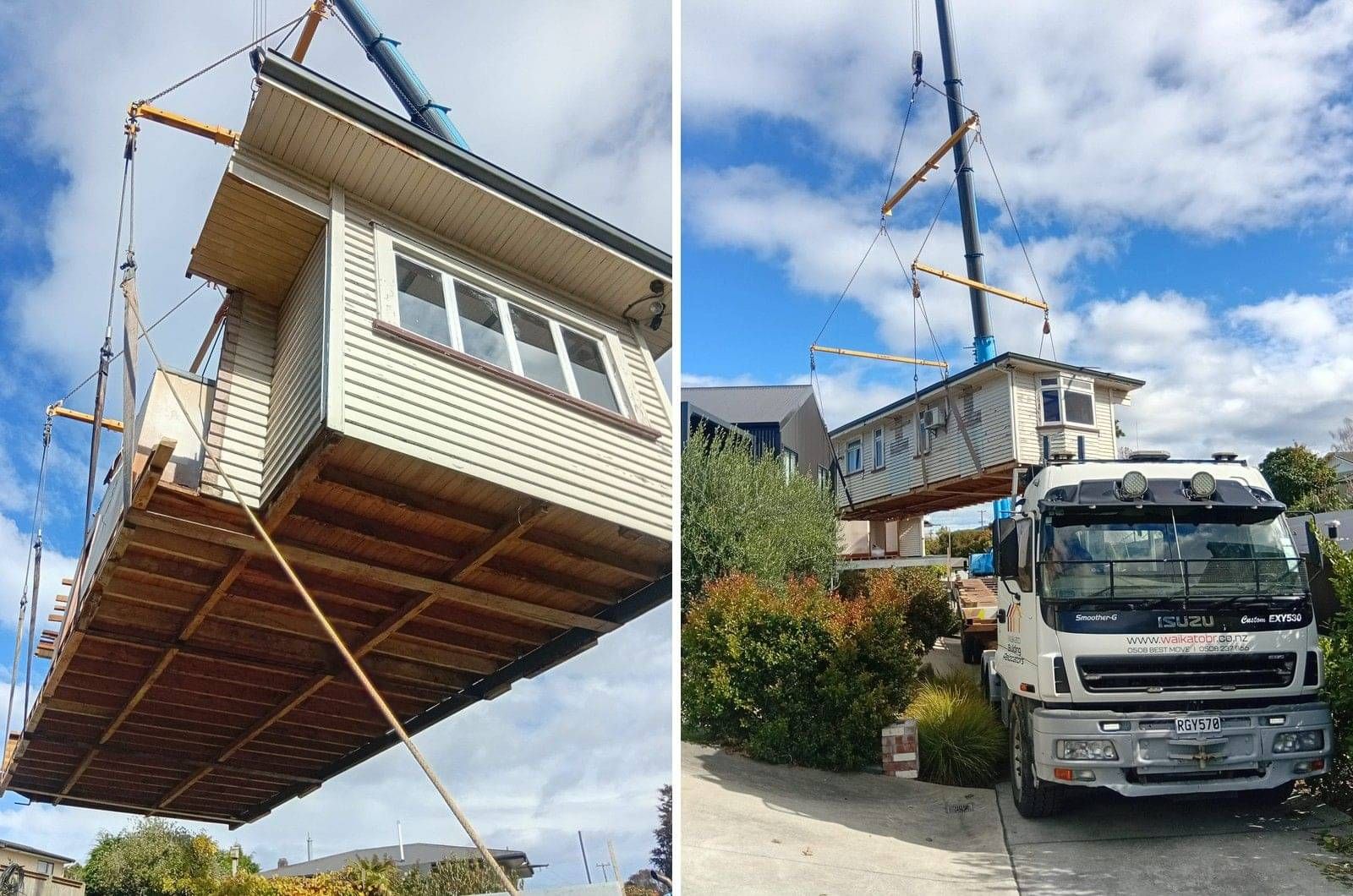
A weatherboard villa lifted clear of the driveway on spreader bars, with the crew guiding it by tag line.
Why a Crane, Not a Truck
Jobs like this only work because of the equipment and experience sitting behind them. We have the equipment and crew to move engineered structures over five metres wide and up to twenty metres long, which covers most houses in the country - but width and length are only part of the equation. Every move uses specialised trailers and hydraulic systems, and on a standard job that's how a house travels from A to B. Craning changes the constraint entirely: instead of asking "can this house fit down this road," the question becomes "can this house be lifted safely and set down accurately." That's a different skill set, and it's one we'd built through decades of combined experience in the crew before this particular job ever came up - which is exactly why we backed ourselves to take it on.
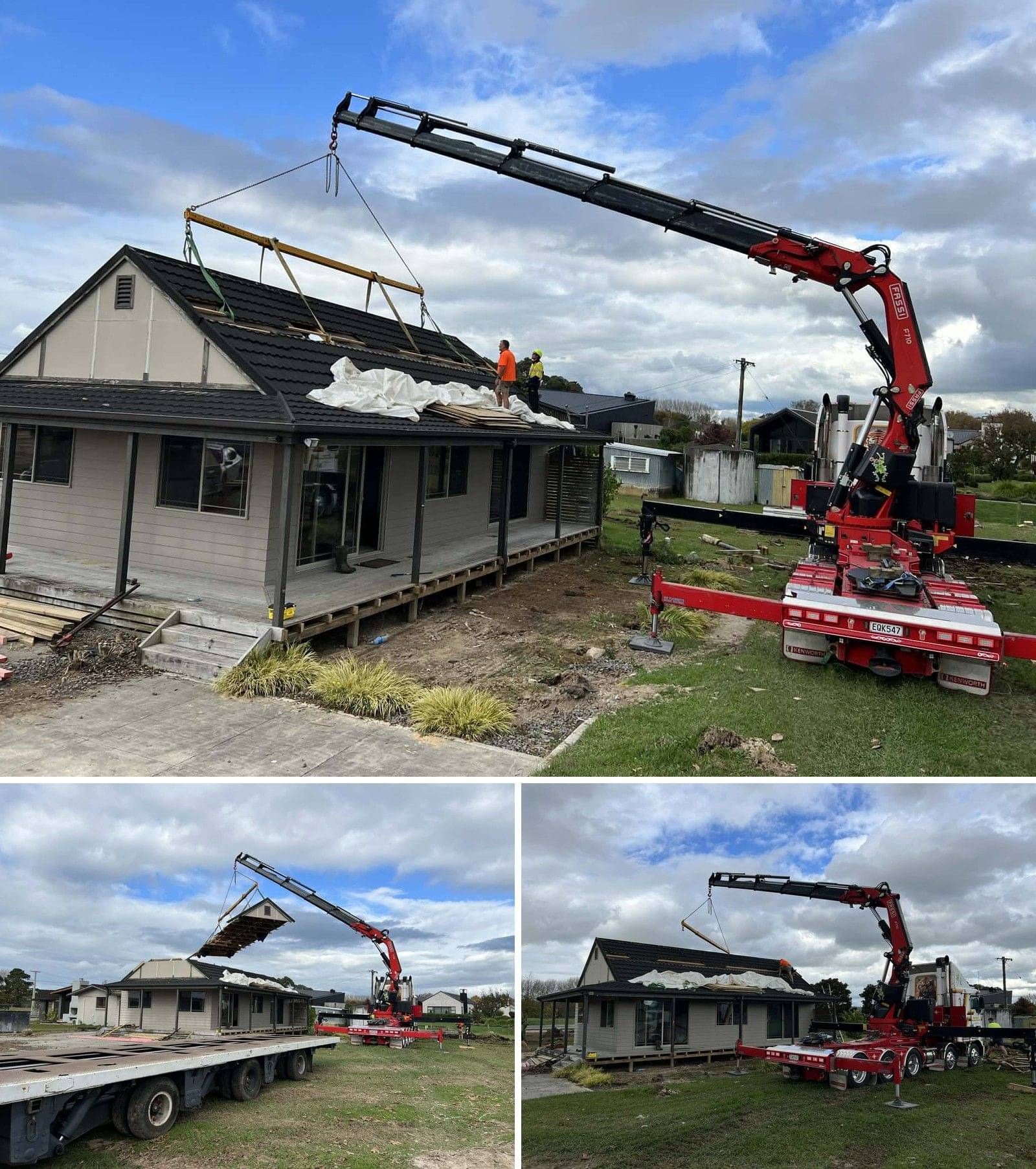
Roof lowering: the crane lifts the roof off in sections so the house clears power lines and bridges on the route.
The Other Trick Up Our Sleeve: Lowering the Roof
Craning a house over rooflines is one way to solve an access problem most movers wouldn't touch. Another, more common one, is lowering the house itself. For taller homes, we can remove or lower the crown of the roof so the house can travel under power lines, bridges and other height restrictions, then reinstate it once it's on site. It's this kind of problem-solving - roof lowering on one job, a crane lift on another - that makes otherwise "unmoveable" houses moveable. Between the two, we've rarely come across a genuine dead end. If a house is sound and worth saving, there's usually a way to get it where it needs to go; it just isn't always the obvious way.
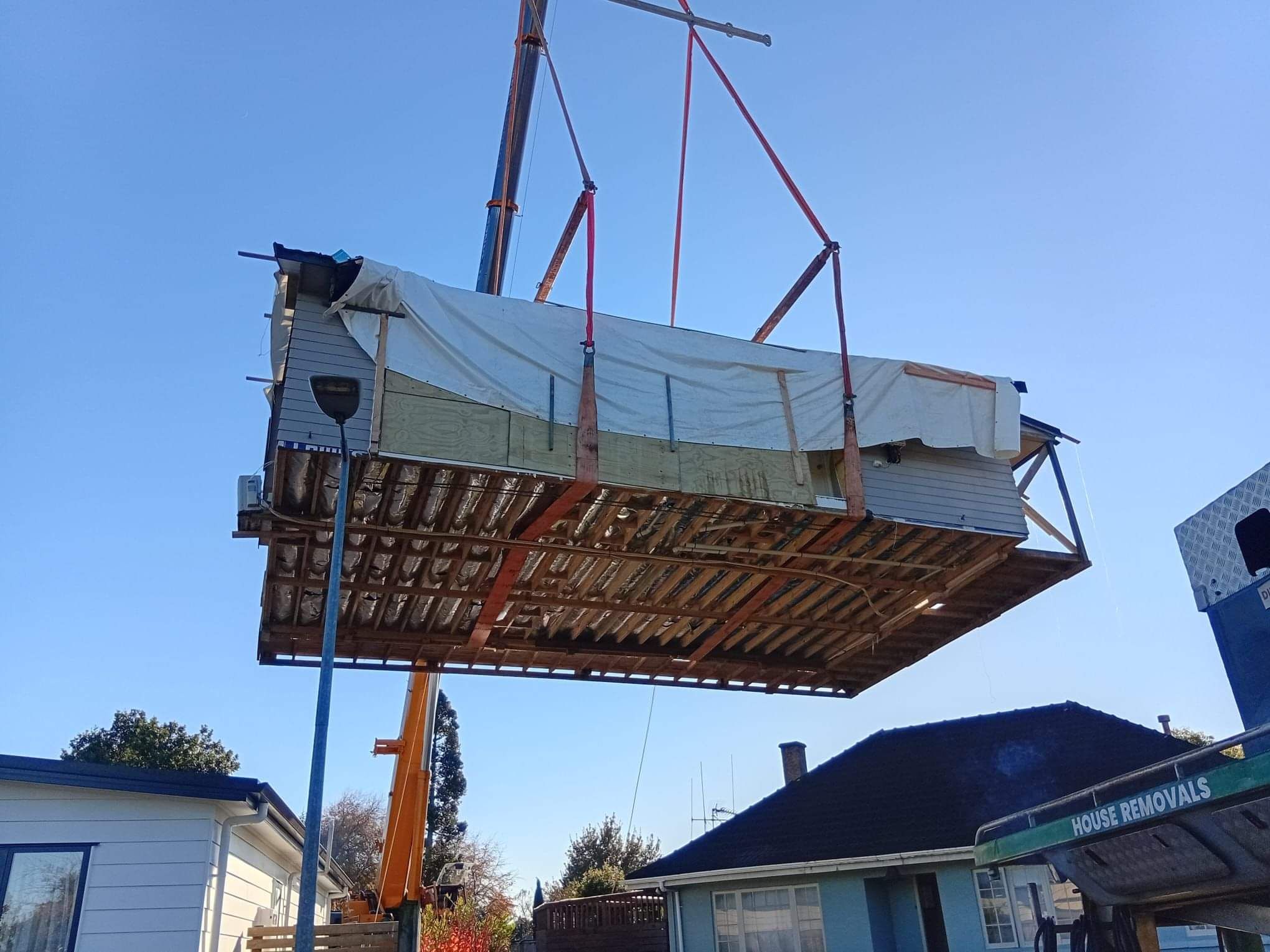
Every lift is rigged from underneath so the floor carries the load evenly.
Why We Take On Jobs Like This
Tom and Becks put it simply: "We believe that relocating homes is not just about moving buildings; it's about moving lives, preserving memories, and creating a sustainable future." That's the thinking behind taking on a job as technically demanding as a crane lift rather than telling the client it couldn't be done. A house that gets craned over its neighbours instead of demolished is still a family's home at the other end of it - still worth the extra planning, the extra risk management, and the extra day on site to get right. It's the same reason we buy sound homes for removal rather than watching them go to landfill: if a building's worth saving, we'd rather find the way to save it.
What to Ask Before Booking a Complex Lift or Difficult-Access Move
Ask whether the mover has actually completed a crane lift or comparable complex-access move before, not just standard trailer relocations
Confirm who is responsible for engineering sign-off on a crane lift, and check it's factored into the quote
Ask how height restrictions like power lines and bridges will be managed on your specific route, including roof lowering if needed
Check what contingency plan exists if weather or site conditions change on the day
Ask for a walk-through of the access before committing, not just a quote based on photos
Talk to Us About Your Access Problem
Phone 0508 BEST MOVE (0508 237 866) or email info@waikatobr.co.nz and we'll walk the site with you.
If your section has an access issue that's made other movers say no, it's worth a call before you assume the house can't be saved.
FAQs
Got questions? We've got answers! See more of our common house moving questions here
Can any house be craned into position, or only certain types?
Not every job is a crane job, and it's not usually the first option we reach for - a standard trailer move is simpler and more cost-effective when the access allows it. Craning becomes the answer when the site genuinely doesn't allow a house to be driven in, as was the case on this Waikato job where the gap between neighbouring properties ruled out a conventional approach. Feasibility comes down to the weight and dimensions of the structure, the crane capacity available, and the clearances above and around the lift path. We assess each property individually rather than assuming either way, so the honest answer is: often yes, but it depends on your specific site.
How does WBR handle houses that can't fit under power lines or bridges?
For taller homes, we can remove or lower the crown of the roof so the house can travel under power lines, bridges and other height restrictions, then reinstate it once it reaches the new site. It's one of two main tools we use to solve access problems that would stop a lot of other movers - the other being a crane lift, as used on this job, for situations where even a lowered roof still won't solve the access. Between roof lowering and route planning that isolates power lines and lowers traffic signals where needed, most height restrictions have a workable solution.
Is a crane lift more expensive than a standard house relocation?
Yes, typically - a crane lift involves specialised equipment, engineering input and a level of planning that a standard trailer move doesn't require, so it costs more. That said, the alternative on a genuinely difficult site is often demolition and a full rebuild, which usually costs a great deal more than even a complex relocation. We'll always assess the site honestly and tell you if a simpler option exists before recommending anything as involved as a crane lift.